Advantages and disadvantages at a glance
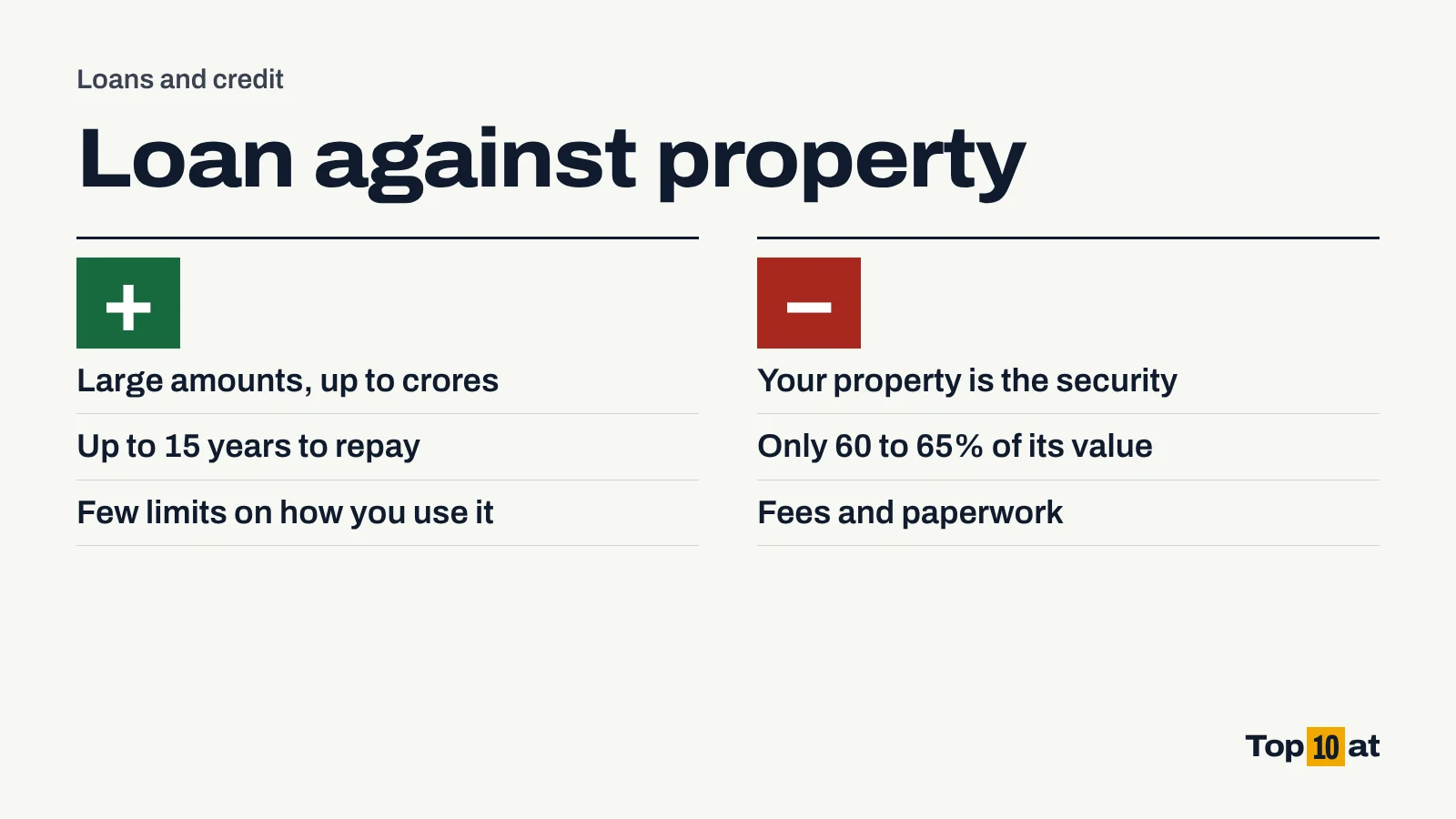
Advantages
- You can borrow a large amount, often ₹10 lakh or more
- Repayment can be spread over many years, which keeps each instalment lower
- The money can be used for most personal needs
- You keep living in or using the property
- Some lenders charge no penalty for repaying early
- The property can belong to a close family member who joins the loan
Disadvantages
- The property is mortgaged, and you can lose it if you default
- You get only a part of the property's value
- There is a processing fee, plus the cost of a long loan in interest
- Lenders set a minimum loan size, so it does not suit small needs
- You must meet income and age conditions
- A long tenure means paying interest for many years
Advantages explained
Larger sums than an unsecured loan
Because the lender holds security, it can lend much more than it would on a personal loan. State Bank of India, for example, offers loans against property from ₹10 lakh up to ₹7.5 crore, depending on where the property is.
A long time to repay
The same bank allows 5 to 15 years. Spreading repayment over a longer period lowers each monthly instalment, which is what makes a large loan manageable on a salary or business income.
Freedom in how you use the money
A home loan must be spent on a home and a car loan on a car. A loan against property is a general-purpose loan. SBI describes it as a loan for personal purposes such as education, marriage or medical costs, and excludes only speculative use.
You keep the property
Mortgaging a property is not selling it. You continue to live in it, run a business from it or collect rent on it for as long as you keep up the repayments.
Early repayment without a penalty
SBI states that it charges no prepayment penalty on this loan. Where that is true of your lender, you can clear the loan early if your income improves and save the remaining interest.
Family property can be used
The property does not have to be in the borrower's own name. SBI accepts property held by the applicant's spouse, child, parent or sibling.
Disadvantages explained
The property is at stake
This is the point to weigh most carefully. The loan is secured by a mortgage, which gives the lender a legal claim on the property until the loan is repaid. If you stop paying, the lender can enforce that claim. Borrowing against the house your family lives in to fund something uncertain, such as a new business, puts the house at risk if the plan fails.
You cannot borrow the full value
Lenders keep a margin. At SBI the loan is limited to 65% of the property's value for loans up to ₹1 crore and 60% above that. A property valued at ₹1 crore would therefore support a loan of about ₹65 lakh, assuming your income also qualifies.
Fees
SBI charges a processing fee of 1% of the loan amount, capped at ₹50,000, plus tax. On a ₹30 lakh loan that is ₹30,000 before tax.
Not for small amounts
With a minimum of ₹10 lakh at SBI, this is the wrong product for a short-term need of a lakh or two.
Income and age limits
Owning property is not enough. SBI asks for a net monthly income of at least ₹25,000 and requires the loan to be repaid before the oldest borrower turns 70, which shortens the tenure available to older applicants.
Interest adds up over a long tenure
A longer tenure lowers the monthly payment but increases the total interest paid over the life of the loan. Fifteen years of interest on a large sum is a substantial cost, even at a moderate rate.
What the terms look like in practice
| Term | State Bank of India, as published |
|---|---|
| Loan amount | ₹10 lakh to ₹7.5 crore, depending on the property's location |
| Share of property value lent | 65% for loans up to ₹1 crore; 60% above ₹1 crore |
| Repayment period | 5 to 15 years |
| Minimum income | ₹25,000 net a month, or ₹3 lakh a year |
| Age condition | Loan to be repaid before the oldest borrower turns 70 |
| Processing fee | 1% of the loan, up to ₹50,000, plus tax |
| Prepayment penalty | None |
| Property accepted | Residential house or flat, and select commercial property |
| Security | Equitable mortgage of the property |
| Use of funds | Personal purposes. Not for speculation |
Who it suits and who it does not
It can make sense if
- You need a large sum and own property free of other loans
- Your income is steady enough to carry the instalments for years
- The purpose is planned and necessary, such as education or medical treatment
Think again if
- You need a small amount or need it only for a few months
- Your income is irregular or about to change
- The money is for something speculative or uncertain
- Losing the property would leave your family without a home
Questions to ask before you apply
- What is the interest rate, and is it fixed or linked to a benchmark that can rise?
- What is the total amount I will repay over the full tenure, not only the monthly instalment?
- What fees apply besides the processing fee, such as valuation and legal charges?
- Is there any charge for repaying part or all of the loan early?
- If I miss payments, what steps does the lender take, and after how long?
- Could a smaller loan, or a different kind of loan, meet the need without mortgaging the property?
This is general information
Loan terms differ between lenders and change over time. The example terms on this page are one bank's published terms on the date shown and are there to illustrate how the product works. They are not a recommendation of that bank or of the product. Check current terms with the lender, and take advice suited to your own finances before you borrow.
Frequently asked questions
How much loan can I get against my property?
Lenders advance only a part of the property's value. At State Bank of India the limit is 65% for loans up to ₹1 crore and 60% for larger loans, subject to your income.
What is the maximum tenure for a loan against property?
It varies by lender. State Bank of India offers 5 to 15 years, and requires the loan to be repaid before the oldest borrower turns 70.
What happens if I cannot repay a loan against property?
The property is mortgaged to the lender as security. If the loan is not repaid, the lender can recover what it is owed from the property.
Can I use a loan against property for business?
Lenders describe it as a loan for personal needs and exclude speculative use. If you want to fund a business, tell the lender and ask which of its loans fits that purpose.
Can I take a loan against a property in my parent's name?
Some lenders allow it. State Bank of India accepts property held by the applicant's spouse, child, parent or sibling.
Sources
- Loans against property, State Bank of India. sbi.bank.in. Accessed 11 October 2026. The example terms: loan size, margin, tenure, fees, eligibility and security.